
Berlin Researchers Target Telecom Energy Crisis
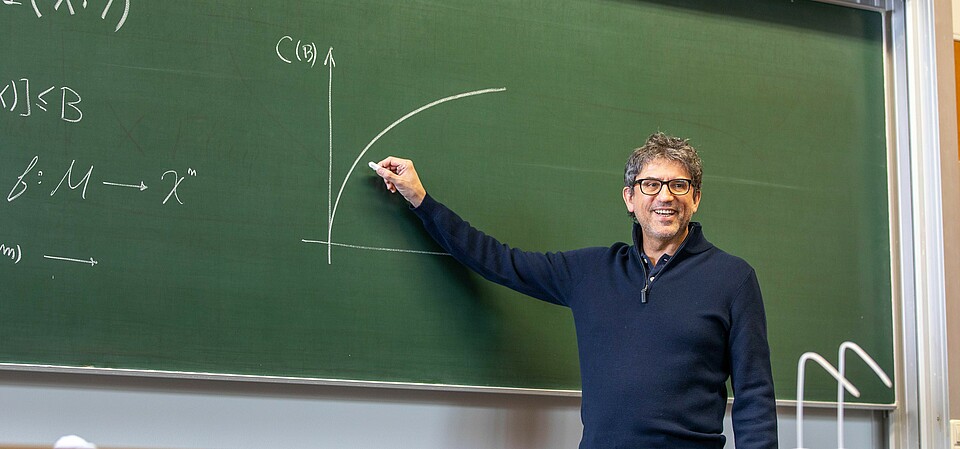
Prof. Dr. Giuseppe Caire
Professor Giuseppe Caire from TU Berlin and his international partners have secured a prestigious ERC Synergy Grant worth ten million euros. Their mission: to revolutionize wireless communication and drastically reduce its environmental footprint.
According to a press release from TU Berlin, the team will spend the next six years developing a groundbreaking approach to data transmission that could solve one of the tech world's most pressing problems. Currently, wireless communication accounts for five to ten percent of global greenhouse gas emissions, and that number keeps climbing.
"We're approaching a critical limit," explains Caire, who heads the Theoretical Foundations of Communication Technology department at TU Berlin. The Leibniz Prize winner is collaborating with Prof Andrea Alù from City University of New York, Prof Marco di Renzo from Université Paris-Saclay, and Prof Christoph Studer from ETH Zurich on the project titled "Waves, Physics, Information, and Computation."
The core innovation lies in keeping data as electromagnetic waves for as long as possible, rather than immediately digitizing every signal. Think of it as using a flashlight to find a needle in a haystack instead of examining every single straw. The technology relies on metasurfaces, materials that can manipulate electromagnetic wave properties through thousands of tiny controllable elements, similar to pixels on a screen.
"Cat photos alone generate incredible amounts of data," Caire notes, highlighting how smartphones have become massive data collectors. While current technology has evolved from SMS to video conferencing over two decades, this progress came at a steep price: massive energy consumption that will only worsen with artificial intelligence expansion.
The team expects industrial applications within roughly ten years. "When energy problems become more pressing and interest in solutions grows, our technology will be ready," Caire promises.