
Berlin's Charité Establishes AI Medicine Institute
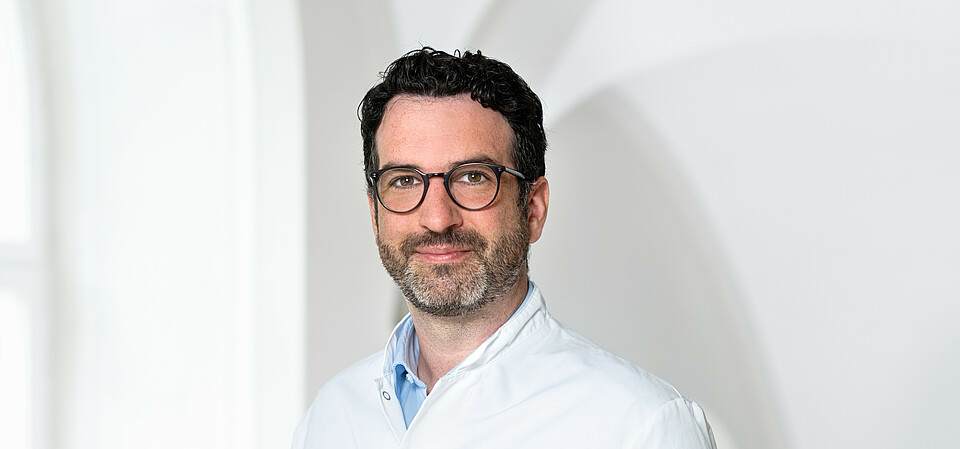
Prof. Alexander Meyer, Head of the Institute for Artificial Intelligence in Medicine - © DHZC | Sarah Paff
Berlin's medical powerhouse is doubling down on artificial intelligence. Charité and the German Heart Center have launched a new Institute for Artificial Intelligence in Medicine (IKIM), bringing together cutting-edge tech and clinical care under one roof.
According to a press release from Charité, the institute addresses a critical problem: too many AI projects fail not because of bad algorithms, but because of missing structures, evidence, and trust. Professor Alexander Meyer, who leads the new institute and holds the newly created professorship for AI in Medicine, wants to change that.
"We're bringing data scientists directly into the clinics," Meyer explains. The goal is straightforward: develop AI agents for routine operations, build systematic evidence for medical AI in real clinical environments, and create production-ready systems that actually help hospital staff and patients.
The institute focuses on four key areas. First, application-oriented development of AI systems for patient care, hospital management, and medical research, including large AI models for intensive and preventive medicine. Second, evidence-based implementation through clinical studies that prove effectiveness and safety. Third, explainable AI that makes decisions transparent for doctors. And fourth, transfer and education to anchor AI competencies in medical training.
Meyer brings serious credentials to the role. He has initiated major digitalization projects at Charité and DHZC, from real-time prediction systems for postoperative complications to AI-supported medical documentation. As Chief Medical Information Officer at DHZC, he continues driving digital transformation.
The institute gets support from heavy hitters: the Berlin Institute for the Foundations of Learning and Data (BIFOLD), the German Heart Center Foundation, and the Charité Foundation. Professor Grégoire Montavon, recently appointed to the first BIFOLD-Charité professorship for Machine Learning in Medicine, joins the leadership team with his research group on explainable machine learning.
Professor Heyo K. Kroemer, Chairman of the Charité Board, sees enormous transformation potential: "We're sending a clear signal that technological innovations can be responsibly transferred into patient care."
The timing couldn't be better. With a digital model clinic currently being developed at DHZC, the institute has a real-world testing ground for innovations. From preventing complications during surgery to using health data while driving, the applications span the full spectrum of modern medicine.